
- All
- Product Name
- Product Keyword
- Product Model
- Product Summary
- Product Description
- Multi Field Search
Views: 147 Author: Site Editor Publish Time: 2026-04-10 Origin: Site


Ball nuts are critical components in precision linear motion systems, playing a vital role in converting rotational motion into linear motion. They are widely used in CNC machines, robotics, automation, and industrial machinery due to their ability to deliver high accuracy, low friction, and smooth operation. While many people focus on ball screws themselves, the design of the ball nut is equally essential. A well-designed ball nut can significantly impact the efficiency, load capacity, and overall performance of a linear motion system.
This article explores how ball nut design influences system performance, covering structural considerations, material selection, preload mechanisms, lubrication methods, and maintenance practices. By understanding these factors, engineers and manufacturers can optimize efficiency, maximize load capacity, and extend the service life of precision equipment.
A ball nut contains multiple rolling elements—typically hardened steel or ceramic balls—that circulate between the grooves of the nut and the ball screw shaft. As the screw rotates, these balls roll along the tracks, converting rotational motion into precise linear movement. This rolling contact minimizes friction and wear compared to sliding systems, making ball nuts highly efficient and reliable for repeated, high-precision tasks.
Component | Function | Impact on Performance |
Balls | The rolling elements that carry the load | Their number, size, and material determine load distribution and efficiency |
Nut Body | Encases the balls and guides them along a recirculation path | Its rigidity and material quality directly affect the ball nut’s load capacity |
Return Mechanism | Circulates balls through the nut to maintain continuous motion | Its efficiency influences friction and smoothness |
Thread Geometry | Ensures precise contact and load transfer between the balls and screw | Precise thread design ensures uniform load distribution and helps prevent premature wear |
The interaction of these components defines the ball nut's overall performance in both light-duty and heavy-duty applications.
Efficiency refers to the ratio of mechanical output to input in a motion system. In linear motion, it determines how much rotational input is needed to achieve a certain linear movement. Ball nut design has a direct effect on efficiency due to the following factors:
The design of the return path for balls within the nut affects rolling smoothness and friction. A well-engineered recirculation system ensures that balls move continuously without jamming or excessive resistance. High-efficiency ball nuts reduce torque requirements, enabling motors to operate with less power while maintaining speed and precision.
Hardened steel or ceramic balls reduce rolling friction and resist deformation under load. Softer materials may increase friction and reduce efficiency over time. Ceramic balls, in particular, provide lower weight, higher stiffness, and minimal wear, which can improve both speed and energy efficiency.
The rigidity of the nut body affects the transmission of load between the screw and the rolling elements. A flexible nut may allow micro-deformations under load, increasing friction and decreasing system efficiency. High-stiffness nut designs maintain alignment and smooth motion even under high axial forces.
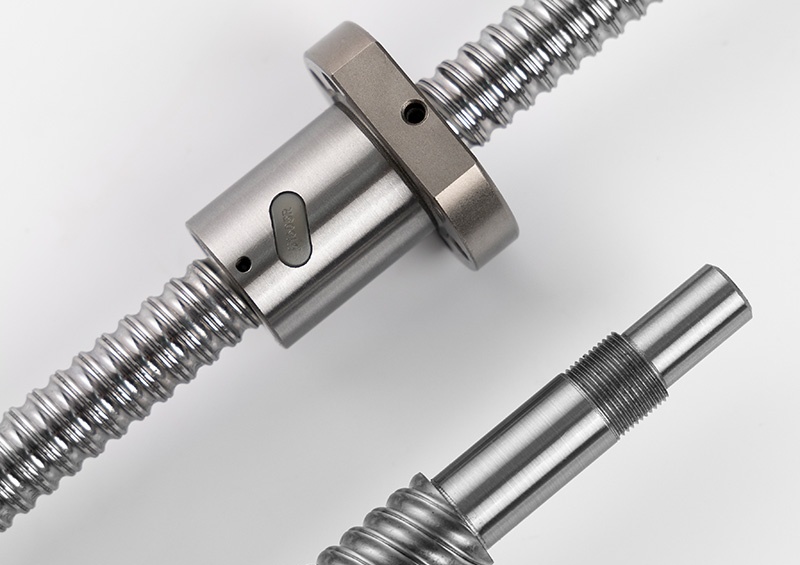
Load capacity defines the maximum axial load a ball nut can carry without failure or permanent deformation. Proper design ensures that forces are distributed evenly across the rolling elements, reducing localized stress and extending service life.
Number of Balls: More balls per nut increase contact points, distributing the load more evenly and enhancing axial capacity.
Ball Diameter: Larger balls carry higher loads, but may require a larger nut body and screw diameter.
Thread Geometry and Pitch: The profile of the screw thread affects how load is transferred to the balls. Optimized pitch angles and thread depth increase load capacity.
Preload Mechanism: Preloading reduces backlash and maintains constant contact between balls and threads, enhancing rigidity and load handling under dynamic conditions.
Ball nuts often use preload techniques to eliminate backlash and increase stiffness. Methods include:
Single-Nut Preload: Internal tension applied to reduce free play.
Double-Nut Preload: Two nuts pressed against each other to minimize backlash and increase rigidity.
Spring or Elastic Preload: Applies continuous force to maintain consistent contact even under vibration or dynamic loads.
Preloading improves both efficiency and load capacity, allowing the system to handle heavier loads while maintaining precision.
Lubrication is essential for minimizing friction and wear. Ball nut design can incorporate features to retain lubricant within the recirculation path. Proper lubrication:
Reduces rolling friction and increases efficiency.
Protects balls and threads from wear, corrosion, and pitting.
Maintains smooth motion in high-speed applications.
Modern ball nut designs often include integrated grease channels or self-lubricating polymers to simplify maintenance and improve performance.
The choice of materials for the ball nut body and rolling elements directly impacts efficiency, load capacity, and durability.
Hardened Steel Nuts: Offer excellent load-bearing capacity and durability for industrial applications.
Stainless Steel Nuts: Provide corrosion resistance in wet or chemical environments.
Ceramic Balls: Reduce weight, resist corrosion, and lower friction for high-speed or precision applications.
Polymers or Coatings: Enhance self-lubrication and reduce maintenance requirements while maintaining efficiency.
Selecting the right combination of materials ensures the ball nut can meet specific operational demands, including load, speed, environmental exposure, and lifespan.
Ball nuts with optimized design are used in diverse industrial applications:
CNC Machines: High-precision milling, turning, and drilling require minimal backlash and consistent load capacity.
Robotic Systems: Accurate and smooth linear motion enables precise positioning and repeated tasks.
Medical Equipment: Ball nuts are used in imaging devices, surgical systems, and automated lab equipment requiring micrometer-level precision.
Aerospace Manufacturing: Components requiring precise assembly, testing, and inspection benefit from high-stiffness, preloaded ball nuts.
Automated Production Lines: Ensures high-speed, repeatable motion while carrying heavy loads reliably.
Across these applications, ball nut design directly influences the system’s efficiency, reliability, and lifespan.
Well-designed ball nuts reduce maintenance requirements. Key considerations for maintenance include:
Regular Lubrication: Even self-lubricating nuts benefit from periodic inspections to ensure optimal performance.
Inspection for Wear: Check for pitting, spalling, or deformation on balls and threads.
Cleaning: Remove dust, debris, and contaminants to maintain smooth motion.
Avoid Overloading: Exceeding specified load ratings can reduce efficiency and damage the nut.
Effective maintenance extends the operational life of the ball nut and preserves system efficiency.
Modern manufacturing and materials science have led to innovations in ball nut design:
Hybrid Ceramic Balls: Combining steel and ceramic for high-speed and high-load applications.
Coated Nuts: Low-friction coatings reduce lubrication requirements and improve efficiency.
Integrated Sensors: Advanced ball nuts now include sensors to monitor preload, temperature, and wear for predictive maintenance.
Compact and High-Load Designs: Optimized geometry increases load capacity while reducing overall size for space-constrained applications.
These innovations make ball nuts more reliable, efficient, and versatile in advanced automation systems.
For industrial manufacturers, sourcing reliable materials for ball nuts is essential. PRIO specializes in high-performance materials for ball nut production, including premium polymers, steel alloys, and coated components. Using quality materials from trusted suppliers enhances efficiency, increases load capacity, and ensures consistent precision in high-demand applications. Partnering with reputable material providers reduces downtime, maintenance, and operational costs while improving overall system performance.
Ball nut design plays a critical role in determining the efficiency, load capacity, and durability of precision linear motion systems. Factors such as ball material, thread geometry, preload mechanisms, nut body stiffness, and lubrication all influence performance. Properly designed ball nuts provide high efficiency, low friction, accurate positioning, and reliable load handling, making them essential for CNC machines, robotics, medical equipment, and industrial automation.
For manufacturers and engineers seeking high-quality materials and components for ball nuts, PRIO offers premium solutions that ensure durability, performance, and efficiency in precision linear motion systems.
Q: How does ball nut design affect linear motion efficiency?
A: Optimized ball circulation paths, preload, and material choice reduce friction, enhancing efficiency.
Q: What factors influence the load capacity of a ball nut?
A: Ball size, number, thread geometry, and nut stiffness determine how much load a ball nut can carry.
Q: Are ceramic balls better than steel balls for high-speed applications?
A: Yes, ceramic balls reduce weight, friction, and wear, improving efficiency in high-speed linear motion systems.
Q: How often should ball nuts be maintained in industrial machinery?
A: Maintenance depends on usage, but routine lubrication, inspection, and cleaning every few months or per operational cycles is recommended.


