
- All
- Product Name
- Product Keyword
- Product Model
- Product Summary
- Product Description
- Multi Field Search
Views: 147 Author: Site Editor Publish Time: 2026-04-15 Origin: Site


Ball nuts are a cornerstone of precision linear motion systems. They convert rotational motion from ball screws into smooth, controlled linear movement. These components are widely utilized in CNC machines, robotics, automated production lines, aerospace systems, and medical equipment. The performance and lifespan of ball nuts depend on several critical factors, including design, material selection, preload, operational speed, load, environmental conditions, and perhaps most importantly, lubrication.
Lubrication is not just about reducing friction. It directly impacts wear, reliability, efficiency, and precision. Inadequate lubrication can result in excessive heat generation, accelerated wear, reduced accuracy, and even total system failure. Proper lubrication selection, application, and maintenance are therefore essential to maximize performance and extend operational life.
This comprehensive guide explores how lubrication choices affect ball nut performance, examining lubricant types, material considerations, application methods, maintenance strategies, operational examples, and modern innovations. By understanding these factors, engineers and manufacturers can optimize system performance, reduce downtime, and achieve long-term reliability.
Ball nuts consist of a nut housing multiple rolling elements, typically hardened steel or ceramic balls, which circulate along the grooves of a ball screw shaft. As the screw rotates, these balls convert rotational motion into linear movement. This rolling contact greatly reduces friction compared to sliding systems, but it does not eliminate the need for lubrication.
Lubrication serves several critical functions:
Friction Reduction – The balls and threads experience both rolling and sliding contact. Lubrication forms a thin film that minimizes friction, allowing smooth motion and reduced energy consumption.
Wear Prevention – A protective film reduces metal-to-metal contact, mitigating pitting, surface fatigue, and abrasive wear.
Heat Dissipation – High-speed operation and heavy loads generate heat. Lubrication helps transfer heat away from contact points, preventing deformation.
Corrosion Protection – Many lubricants contain additives to prevent oxidation and corrosion, which is essential in humid, dusty, or chemically aggressive environments.
Without proper lubrication, even a high-quality ball nut will degrade faster, experience increased backlash, and lose positional accuracy.
Choosing the correct lubricant depends on system speed, load, temperature, and environmental conditions. Industrial ball nuts typically use three types of lubrication:
Lubrication Type | Composition / Material | Best Suited For | Main Advantages | Main Drawbacks |
Grease | Oil, thickener, and additives | Vertical or angled installations; high-load applications | Adheres well to surfaces, provides long-term lubrication, reduces maintenance frequency | Slightly higher torque requirements; needs periodic inspection for contamination |
Oil | Mineral oil or synthetic oil | High-speed, high-precision systems; automated circulating systems | Reduces friction efficiently, dissipates heat well, suitable for continuous circulation | Requires sealing to prevent leaks; may need more frequent replenishment |
Dry or Solid Lubricants | PTFE, molybdenum disulfide, or similar solid materials | Clean-room or contamination-sensitive environments | Provides low-friction performance without liquid lubricant, avoids contamination risk | May not perform as well as grease or oil under heavy loads |
These three types are used in most industrial applications, and selecting the right one depends on speed, load, temperature, environment, and maintenance requirements.
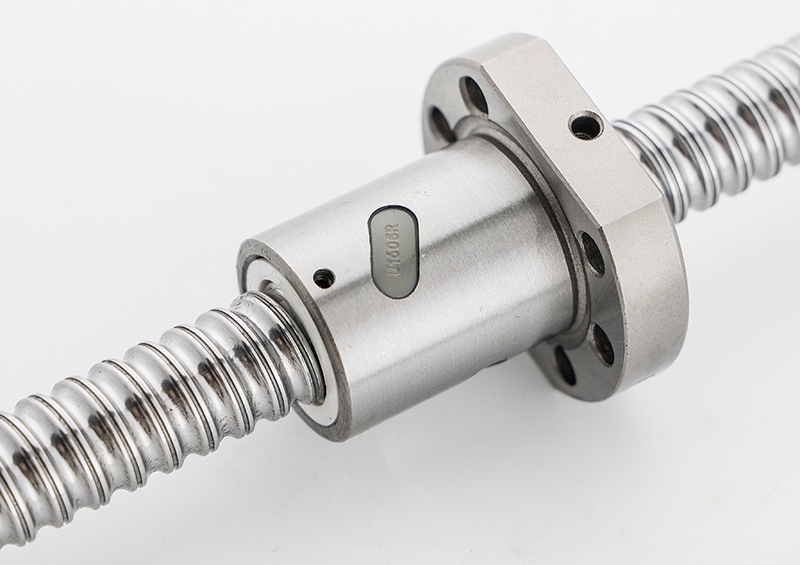
Ball nut preload, the intentional axial force applied to eliminate backlash, directly affects lubrication needs. Preloading increases contact forces between the balls and threads, which raises friction. A lubricant must withstand this pressure while maintaining a consistent film to prevent metal-to-metal contact. Excessive preload combined with improper lubrication can accelerate wear and increase operating torque beyond safe limits.
Proper lubrication ensures that preloaded ball nuts maintain accuracy, reduce vibration, and perform reliably under dynamic loading conditions.
The synergy between preload and lubrication can enhance system performance. For example, a ball nut preloaded for zero backlash can operate smoothly if the lubricant maintains consistent coverage, minimizing friction and heat. Conversely, insufficient lubrication in a preloaded system can lead to uneven load distribution and premature surface fatigue.
Material selection significantly influences how lubrication affects wear and reliability. Hardened steel components are robust and compatible with most oils and greases. Stainless steel components benefit from corrosion-resistant lubricants to avoid oxidation. Ceramic balls, due to their hardness and low friction, often perform well with dry lubricants or light synthetic oils. Matching the lubricant to the ball nut materials ensures long-term precision, minimizes wear, and maintains efficiency under varying operational conditions.
Ball nut wear occurs primarily at the contact points between the balls and the screw threads. Improper lubrication increases friction and generates heat, accelerating pitting, surface fatigue, and thread deformation. Lubrication mitigates wear by maintaining a protective layer, which reduces mechanical stress and distributes load evenly across all rolling elements.
Even in heavily loaded or high-speed applications, the right lubricant preserves ball nut performance over thousands of operational cycles.
Reliability in linear motion systems is the ability to perform consistently over time. Lubrication affects reliability in multiple ways. By reducing friction, the system requires less torque and experiences lower heat generation. Lubricants also maintain stiffness, prevent vibration, and ensure accurate positioning under dynamic load. Proper lubrication reduces the likelihood of unexpected downtime, increases maintenance intervals, and maintains operational precision.
Correct application of lubrication is as important as choosing the right type. Methods include:
Manual Application: Small systems can be greased manually using a brush or cloth.
Automated Lubrication Systems: Large-scale or high-speed systems may use circulating oil or grease injectors for continuous lubrication.
Preloaded Cartridges: Some systems feature factory-filled grease cartridges to ensure consistent coverage without frequent manual intervention.
Proper application prevents uneven lubrication, which can otherwise lead to localized wear or premature failure.
Lubricated ball nuts are essential in many industries. CNC machines rely on them for accurate and repeatable motion in milling, turning, and drilling operations. Robotics depends on lubricated ball nuts to achieve precise multi-axis motion, while medical devices use them to maintain high accuracy in imaging and surgical equipment. Aerospace manufacturing and automated production lines also rely on lubricated ball nuts to handle high loads, rapid acceleration, and continuous operation. In all these applications, lubrication selection directly affects wear rates, accuracy, and system longevity.
Routine maintenance supports lubrication effectiveness and overall performance. Key practices include:
Inspecting lubricant condition and replenishing as needed.
Cleaning the ball nut and screw to remove debris before applying fresh lubrication.
Checking alignment and preload to ensure even distribution.
Protecting the system from dust, moisture, and chemicals using seals or shields.
By following these strategies, maintenance teams can extend the service life of ball nuts, maintain accuracy, and reduce downtime.
Advances in lubrication technology have significantly improved ball nut reliability:
Low-friction synthetic oils reduce energy consumption and heat generation.
Solid lubricants such as PTFE coatings are effective in contamination-sensitive or high-speed systems.
Self-lubricating polymers reduce maintenance intervals while maintaining smooth motion.
Sensor-integrated systems monitor lubricant levels, temperature, and operational load for predictive maintenance.
These innovations increase reliability, minimize wear, and extend operational lifespan, even under demanding industrial conditions.
For industrial engineers and manufacturers, sourcing high-quality materials and lubricants is essential. PRIO provides premium polymers and alloys designed specifically for ball nut systems. Using high-quality components ensures:
Reduced wear and friction under heavy-load conditions
Consistent accuracy and linear motion performance
Extended service life and reduced maintenance requirements
Reliable performance in demanding environments
Partnering with PRIO allows engineers to optimize linear motion systems for precision, efficiency, and long-term reliability.
Lubrication choices profoundly influence ball nut wear and reliability. Selecting the appropriate lubricant, applying it correctly, and maintaining it ensures minimal friction, reduced heat, and consistent performance. Whether using grease, oil, or dry lubricants, engineers must consider operational speed, load, temperature, environmental conditions, and material compatibility. Proper lubrication maximizes accuracy, extends service life, and maintains system efficiency.
For manufacturers and engineers seeking high-quality ball nut materials and lubrication solutions, PRIO provides premium products and technical support to enhance durability, reliability, and performance in precision linear motion systems.
Q: Why is lubrication essential for ball nuts?
A: Lubrication reduces friction, prevents wear, and ensures consistent accuracy and reliability.
Q: What type of lubrication is best for high-speed ball nuts?
A: Low-viscosity synthetic oils or dry lubricants reduce friction and heat while maintaining precision.
Q: Can improper lubrication lead to premature failure?
A: Yes, insufficient or incorrect lubrication increases wear and may cause operational failure.
Q: How often should ball nuts be lubricated?
A: Routine inspection and lubrication every few months, depending on operational load and environment, is recommended.


